


Summer School – “The Role of International and Nongovernmental Organizations in Migration Governance”
On behalf of the MIGRA Research Team – Szczecin of the Faculty of Law and Administration at the University of Szczecin (Poland) and University “VITEZ” (Bosnia and Herzegovina) would like to invite everyone to Summer School “The Role of International and Nongovernmental Organizations in Migration Governance”, which will be held on 9-11 July 2024. If you are passionate about migration governance and the impact of nongovernmental organizations (NGOs) in this crucial field this event will fit your needs. Join us for an enlightening Summer School where we delve into the special roles these organizations play in managing migration flows, advocating for migrants’ rights, and shaping global migration policies.
Why Attend?
- Deepen Your Knowledge: Gain a comprehensive understanding of the legal frameworks and operational mechanisms that govern migration.
- Skill Development: Enhance your analytical and problem-solving skills through interactive and practical sessions.
- Certification: Receive a certificate of participation upon completion of all the Summer School, adding value to your academic and professional profile.
Registration link (click here).
Agenda Summer School
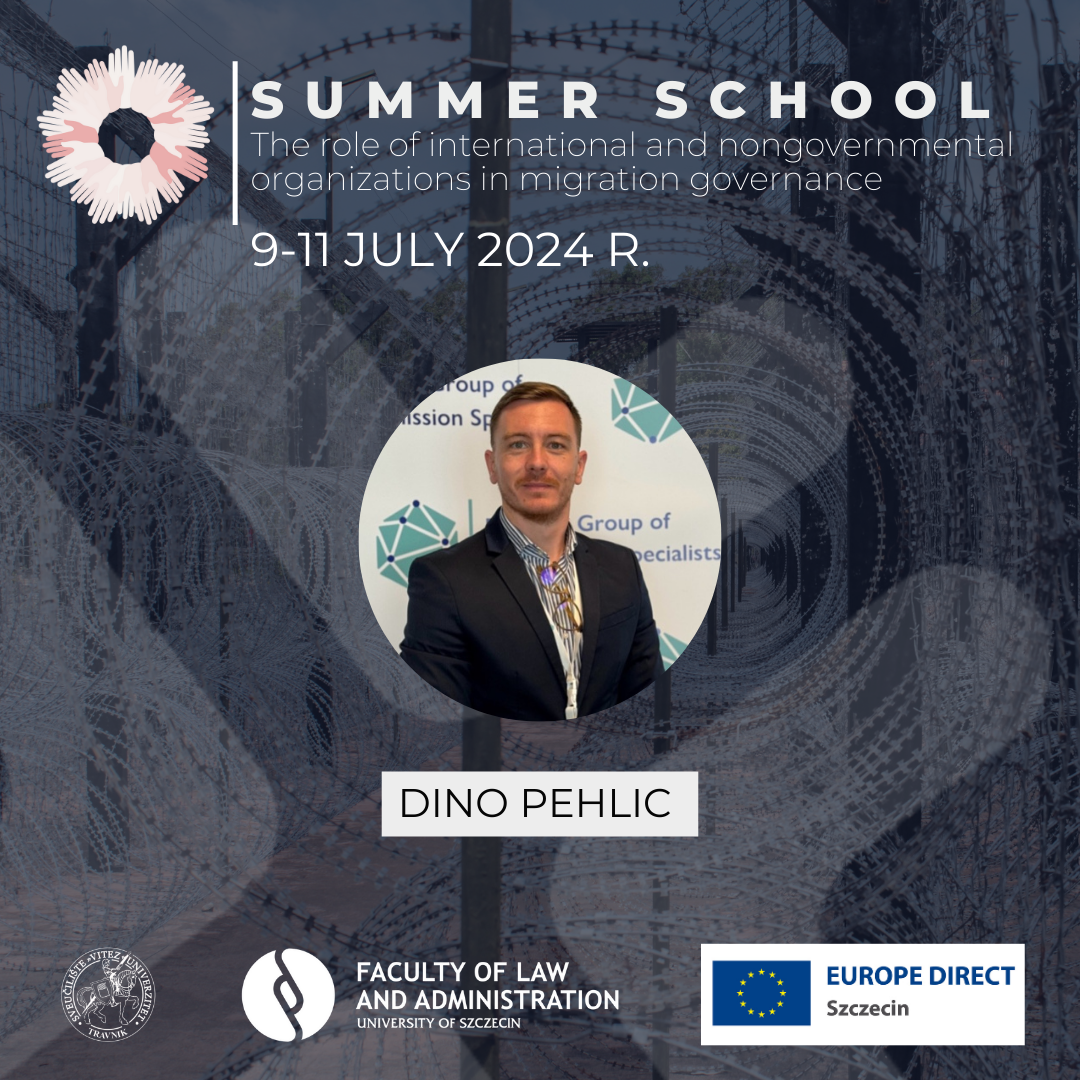
Dino Pehlic is currently working as a Senior Monitoring and Evaluation Assistant in International Organization for Migration mission in BiH. Dino has been involved in the context of migration for the past six years. Previously, Dino had several roles in the Danish Refugee Council (DRC BiH), being mainly focused on the Protection sector and working as a Protection Team Leader and Protection Monitoring Officer. He holds LLB in International law and MA in Democracy and Human Rights. Previously, Dino worked in the areas of human rights, international humanitarian law, war crimes, post-conflict reconciliation process and transitional justice.
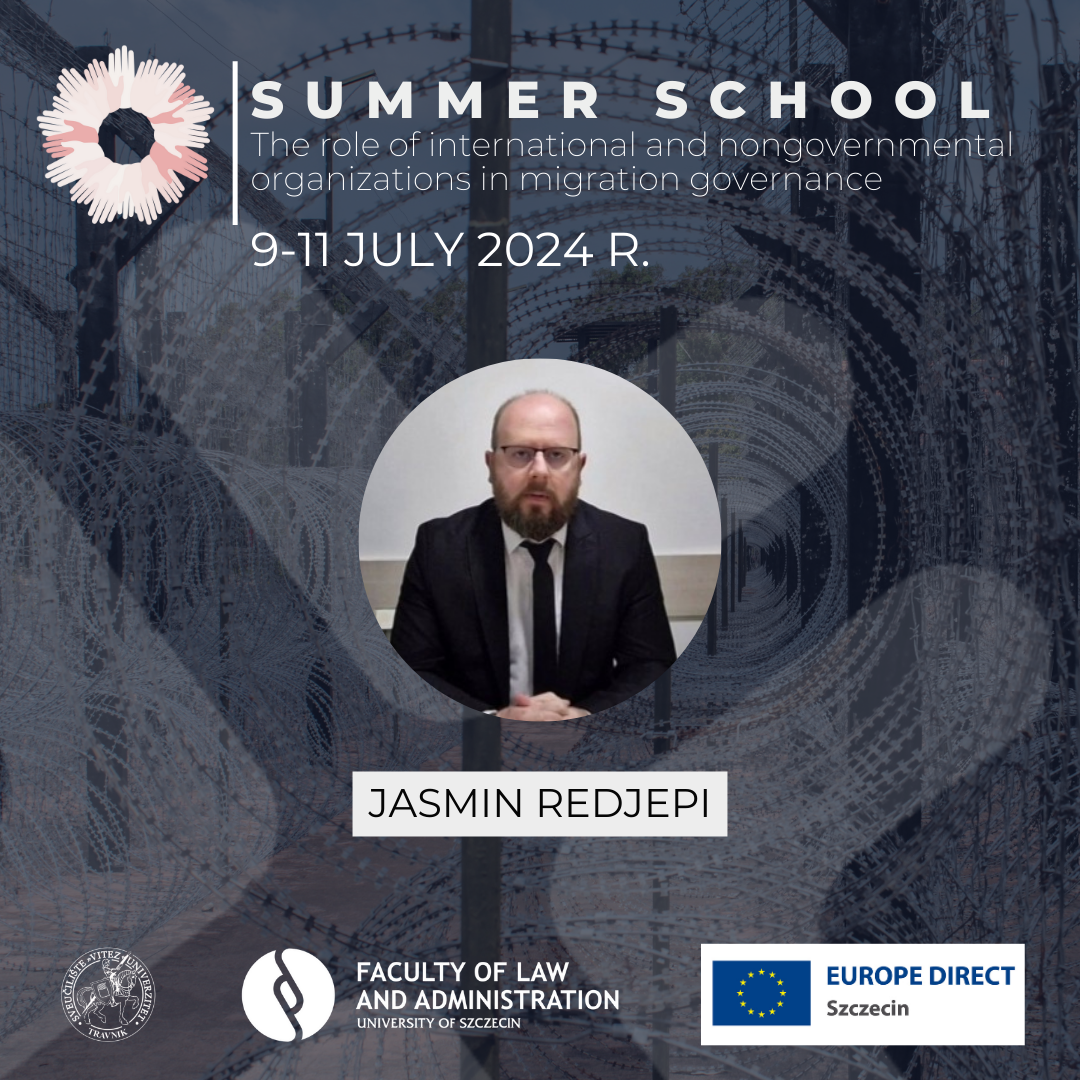
Active in the NGO sector since his student days, Redjepi has participated in humanitarian missions across Europe, Africa, and Asia. He initiated refugee aid in North Macedonia in 2014, advocated for asylum law changes in 2015, coordinated between state and NGOs, and liberated 450 detained refugees.
He lobbies with local and EU authorities and speaks at migration conferences. Redjepi is a human rights trainer at Erasmus and Legis. As part of a 2021 MOU with the State University “Mother Teresa,” he is a key speaker at its annual migration conference.
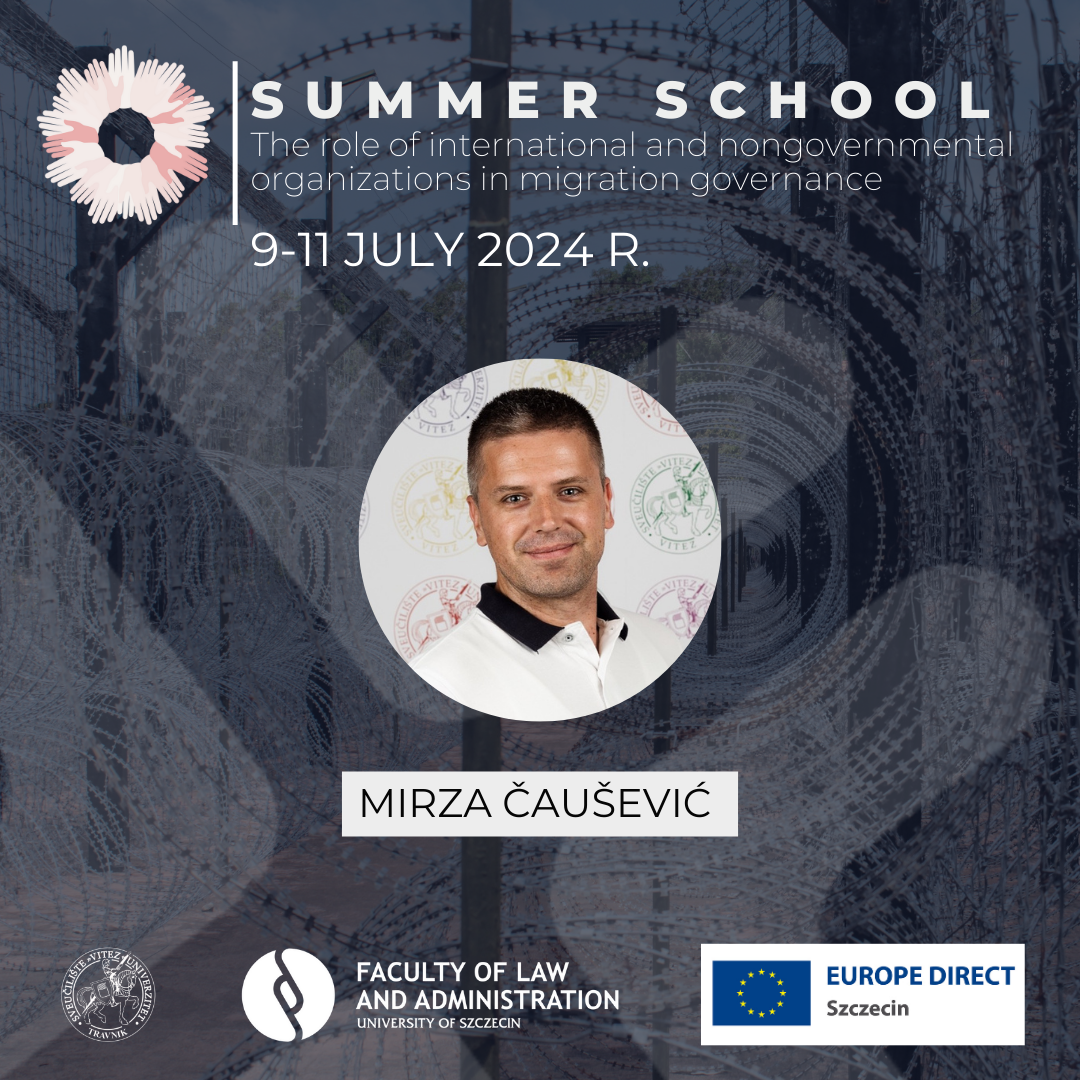
Prof. Dr. Mirza Čaušević currently works as an Associate Professor at the Faculty of Law, University ”VITEZ“. He is the course leader in the Department of State and International Law, and publishes scientific articles in the fields of human rights and fundamental freedoms, European Union law, international humanitarian law, and constitutional law. In 2013, prof. Čaušević earned a master’s degree in diplomacy and diplomatic law, and five years later, in mid-2018, a doctorate in public international law. To date, he has published 80 scientific and professional articles and participated in 20 international and domestic scientific conferences.
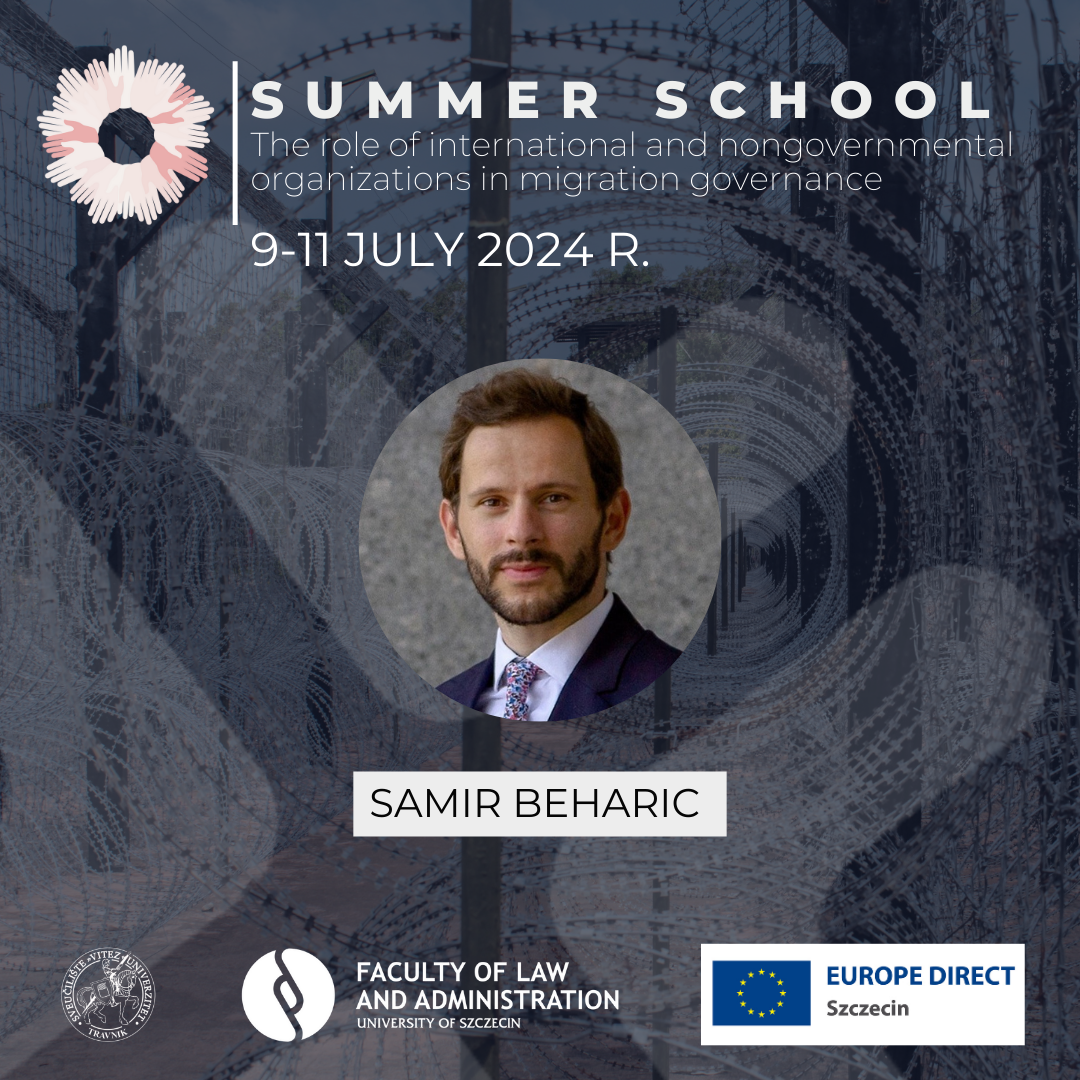
Samir Beharic is a Research Officer at the Balkan Forum and a Ph.D. candidate at the Department of Geographic Migration and Transition Studies at the University of Bamberg in Germany. His research interests are in the areas of international student mobility, youth policy, and human rights.
Beharic received his bachelor’s degree from the University of Sarajevo and studied abroad through international scholarships at the universities in Berlin, Rome, and Samsun. As a scholarship holder of the Konrad Adenauer Foundation, he completed his Erasmus Mundus Joint Master Degree in Global Studies at the University of Vienna and the University of Leipzig.
His professional experience includes serving as a Lantos Congressional Fellow at the U.S. Congress in Washington, D.C., and a Schuman Trainee at the European Parliament in Brussels. Currently, he serves as the president of OCEANS Network, an EU-funded global organization bringing together scholarship holders of international student exchange programs.
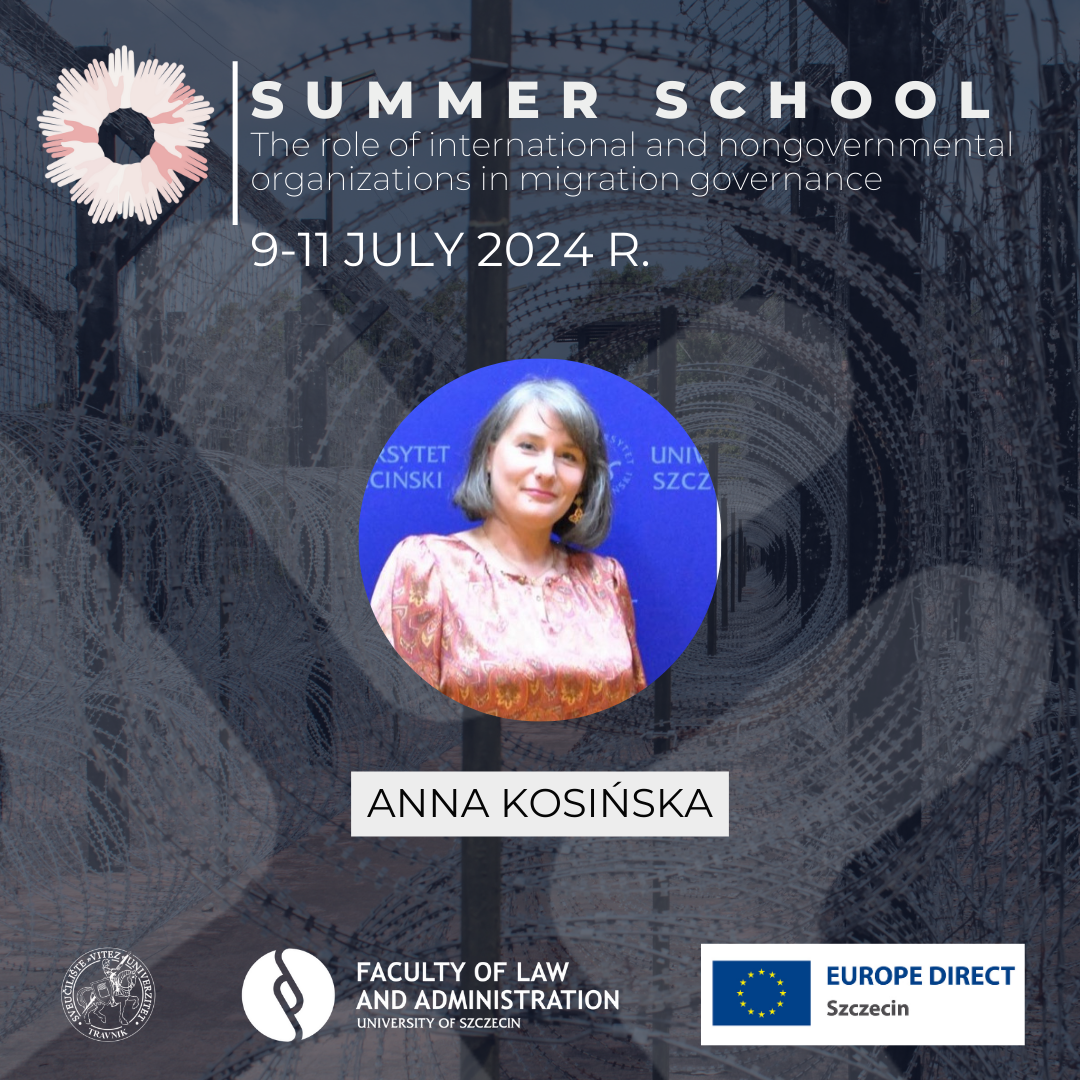
Prof. Anna Kosińska – Graduate of an art history programme at the Faculty of Humanities of the John Paul II Catholic University in Lublin (KUL) and doktor habilitowany (post-doctoral degree) of law and professor of KUL and of the University of Szczecin. Co-creator of the MIGRA-TEAM research team at the Rule of Law Institute; since 2015 head of the Research Center for European Migration Law and Policy at KUL which publishes the “Prawo i polityka migracyjna” [Migration Law and Policy] series.
Coordinator of the Foreigners’ Section of the Legal Clinic at the University of Szczecin and of numerous projects dedicated to helping and integrating migrants (i.a. Support for Voluntary Returns in Lublin Region I and II co-financed from the funds of the European Return Fund). Author of monographs and publications on migration and refugee law and coordinator of NCN projects, now: “Ombudsman jako gwarant ochrony praw podstawowych migrantów” [The Ombudsman as a guarantor of protection of fundamental rights of migrants”]

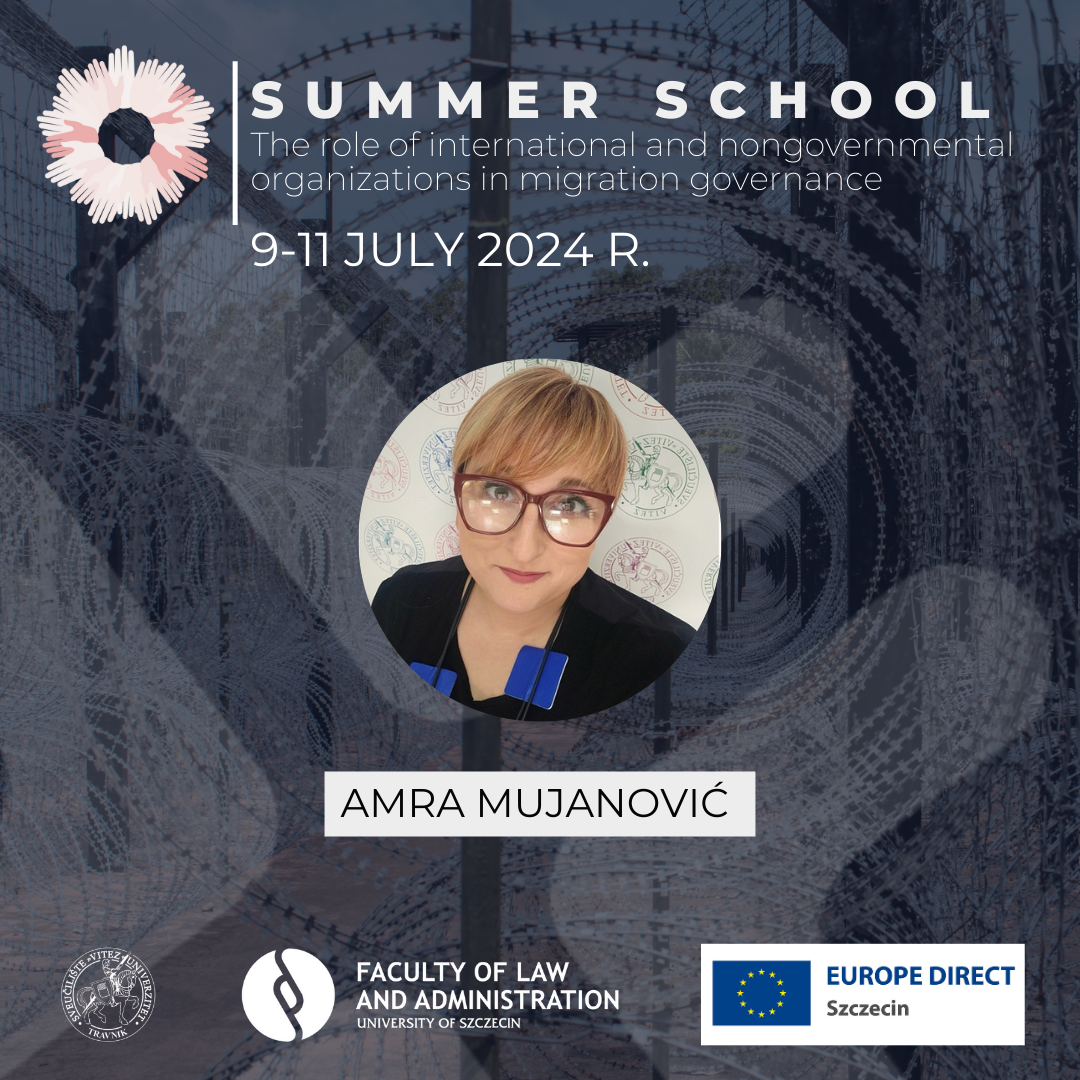
 Her academic publications and interests include issues related to immigrant women, Puerto Rican migration, Caribbean Migration, remittances, legal pedagogy, and OutCrit theory.
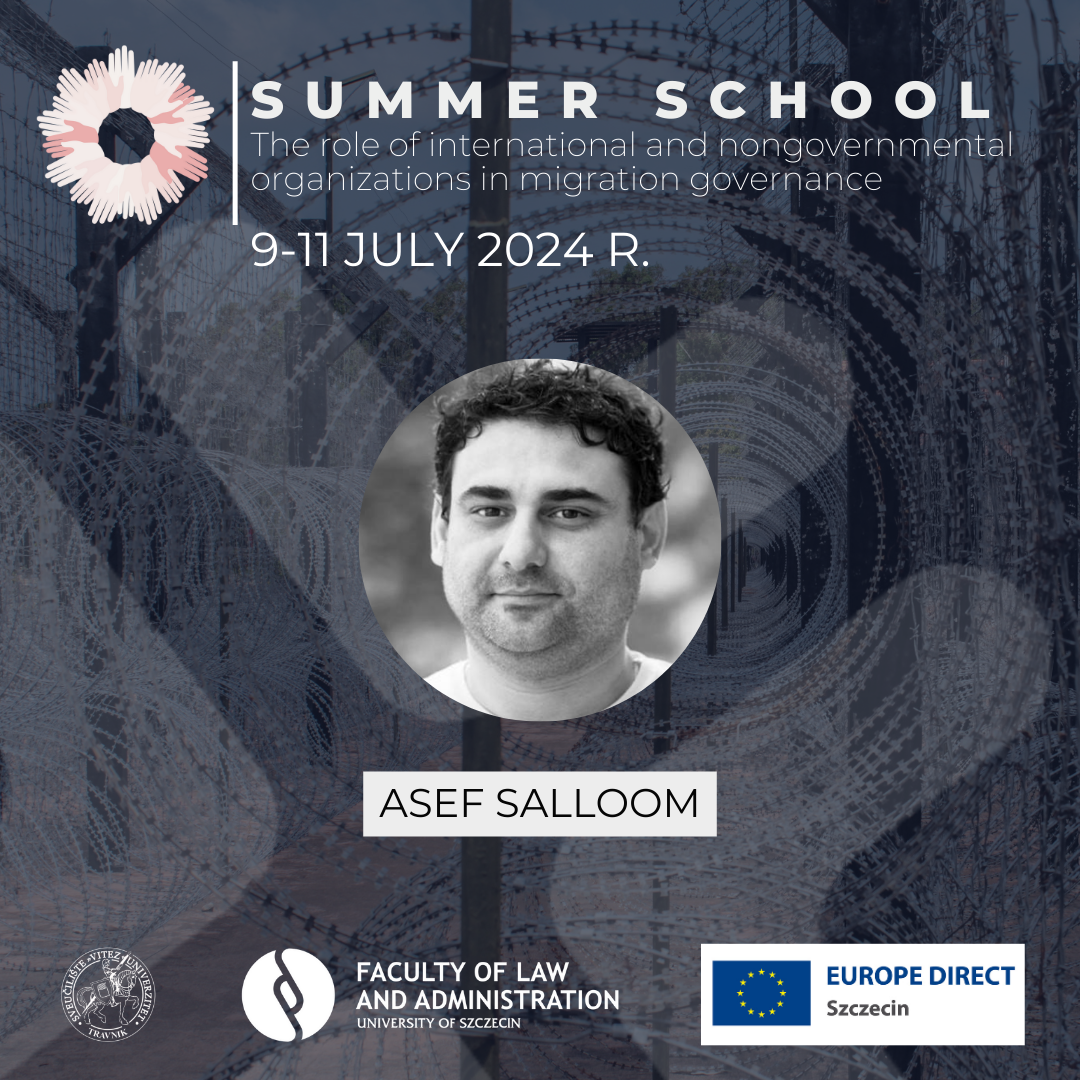
Asef Salloom is the President and Founder of Ganesha Global Foundation, owner of Kopernik Lublin, Las Vegan (an integration center for Poles and foreigners), and the Center of Arabic Language and Culture. He lectures in English language and literature at Lublin University of Technology and is a former lecturer at KUL. An activist in Lublin and across Poland, he is deeply involved in refugee and immigrant issues. He works as an interpreter with UNHCR, leads anti-discrimination projects at Homo Faber, and is also a professional musician and athlete.

Aleksandra Gulińska is a co-founder of the Border Group, an umbrella association of NGOs providing humanitarian aid to migrants crossing the Belarusian-Polish border and monitoring the crisis at this border. She has been a long-time board member of the Homo Faber Association in Lublin. A sociologist associated with the Institute of Social Prevention and Resocialisation at the University of Warsaw, she graduated from the Family Violence Prevention Studies and has focused her work primarily on supporting migrant women experiencing gender-based violence.
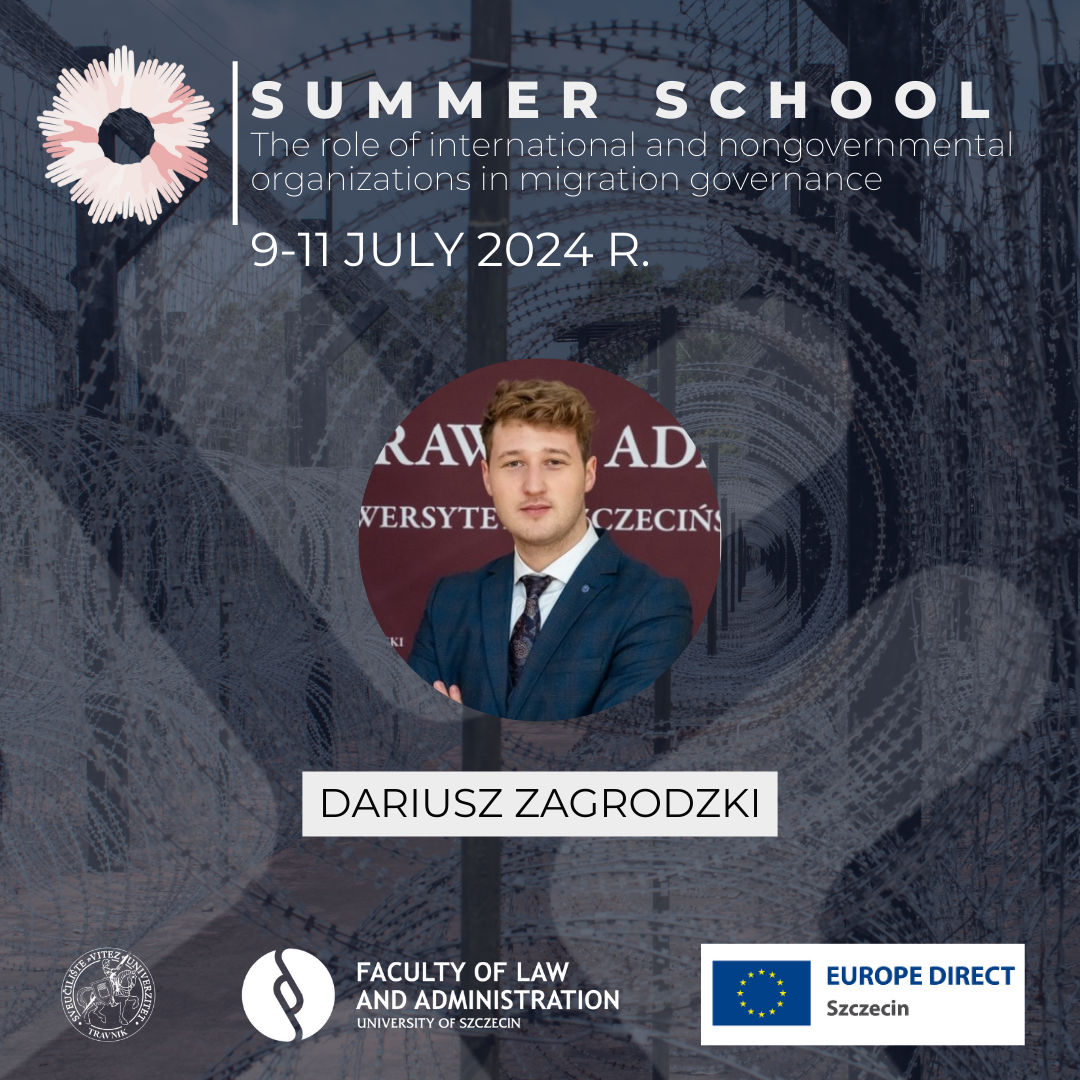
For more information, feel free to contact us at dariusz.zagrodzki@usz.edu.pl